







Meet Steven de Jongh
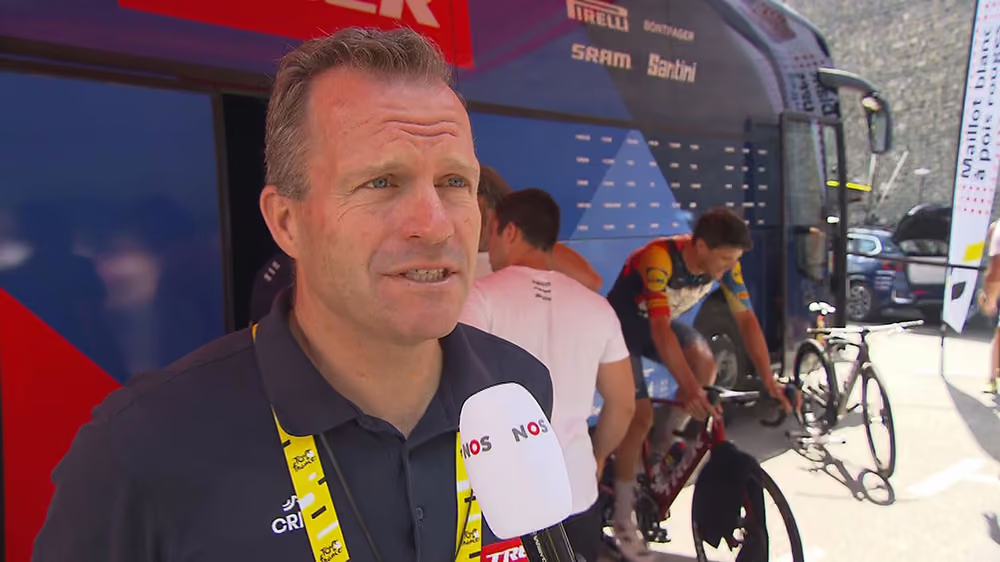
Steven de Jongh spent 15 years racing at the top of professional cycling; winning classics, riding Grand Tours, and later directing some of the world's biggest teams as a directeur sportif. Ride the Elevation is his way of bringing that world closer to yours.
THROUGH THE YEARS
1973
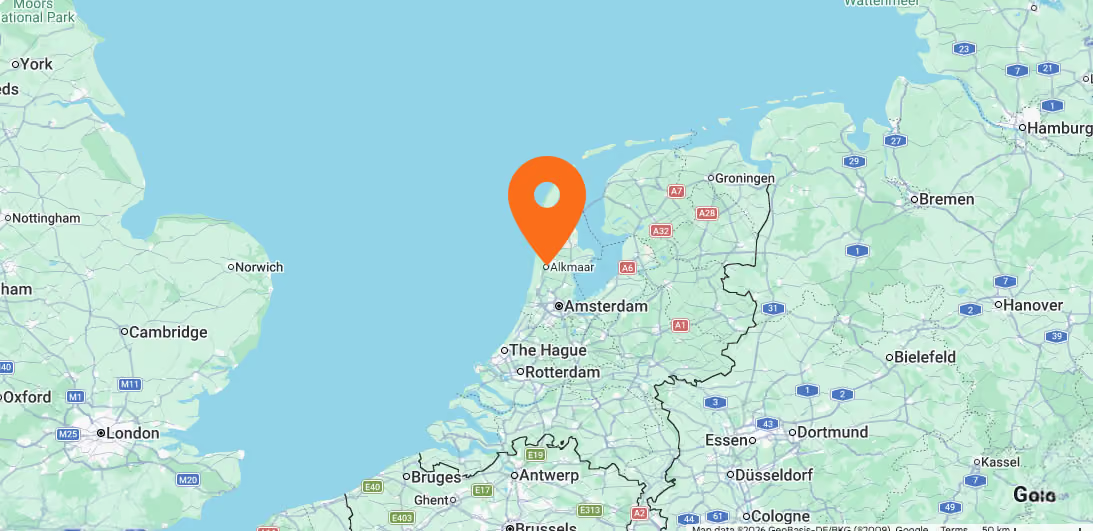
Born in Alkmaar, Netherlands
Steven de Jongh was born on 25 November 1973 in Alkmaar, Noord-Holland. Growing up in the Netherlands, he developed into a powerful, fast-finishing rider; the kind built for the cobbles, crosswinds, and sprint finishes of northern European racing.
1992–1994
The Amateur Years
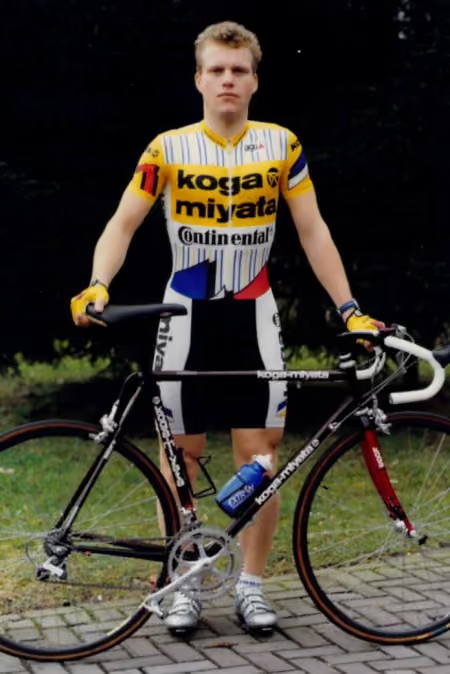
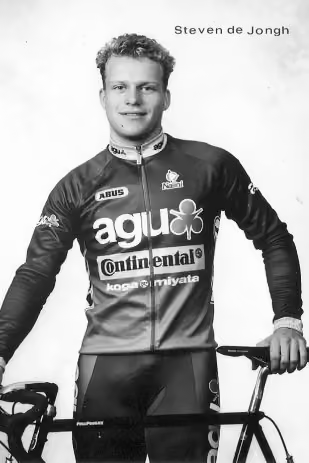
Steven's early results marked him out immediately as a talent to watch. Racing as an amateur, he posted his first notable results in 1994 with stage wins at the Commonwealth Bank Classic in Australia, Olympia's Tour, and the Tour du Poitou-Charentes, as well as overall victory at the Ronde van Zuid-Holland. He was racing across continents before most of his peers had left the Netherlands.
%20Courtesy%20Wim%20Dingemanse.avif)
1995
Dutch U23 Champion & Pro Debut
His breakout amateur season arrived in 1995. He won the Dutch Under-23 National Road Championship, took multiple stages at the Tour of Austria, and won a stage at the Tour de Pologne, all before turning professional with TVM–Polis Direct.
He also claimed the Grand Prix de Waregem (U23) and the PWZ Zuidenveld Tour. It was a statement year that confirmed a rider ready for the highest level.
1995–1999
TVM: Learning the Trade
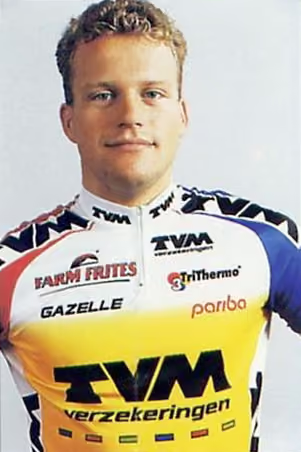
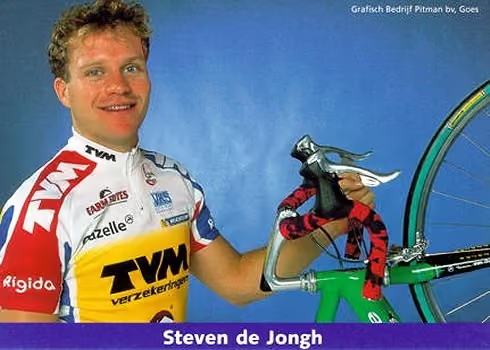
Steven spent his first five professional seasons at TVM–Polis Direct, learning the art of racing against the best in the world. The wins kept coming — stage victories at Tirreno–Adriatico and Vuelta a Castilla y León in 1999, and consistent top results across Belgian semi-classics and Dutch races. He finished the 1998 Tour de France, gaining vital Grand Tour experience, and won the overall Tour of Sweden in 1998. By the end of his TVM tenure he had firmly established himself as a dangerous sprinter and classics rider.
2000–2005
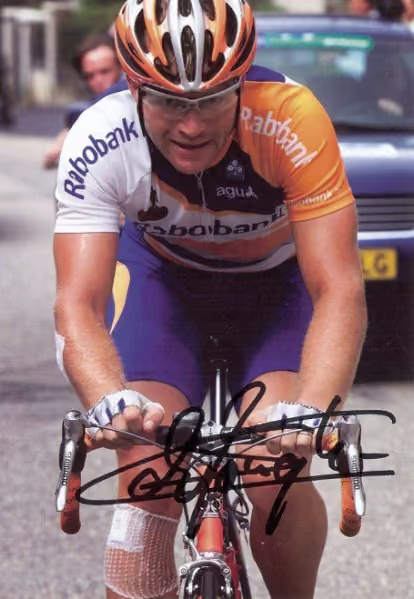
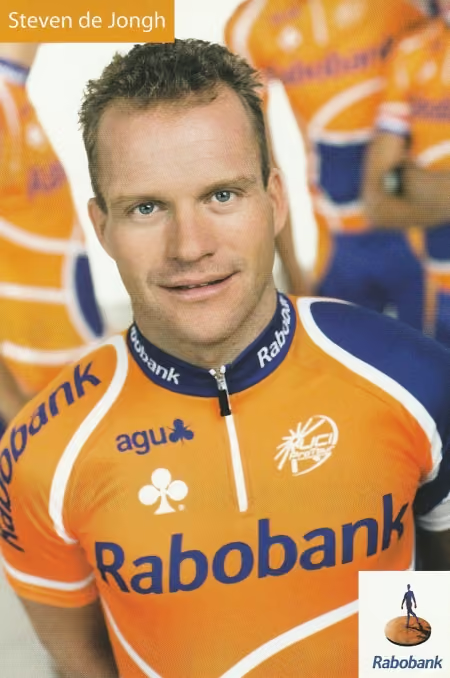
Rabobank: Peak Racing Years
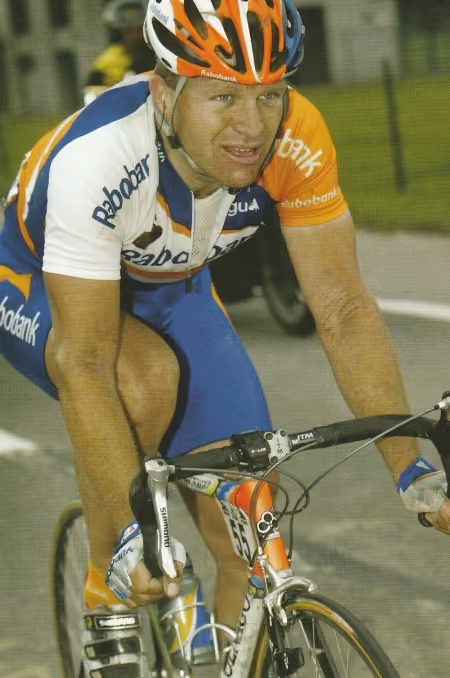
Joining Rabobank in 2000 was the step up that defined his career as a rider. He hit the ground running, winning Veenendaal–Veenendaal (twice, 2000 and 2001), Schaal Sels (2000, 2002, 2003), and the Nationale Sluitingsprijs. He competed at the Giro d'Italia in 2000 and 2002, gaining experience in Grand Tour environments where he was valued as a domestique and opportunistic stage hunter.
His finest hour in the classics came in 2003, when he won the E3 Prijs Vlaanderen (one of the prestigious Belgian spring semi-classics) held in Harelbeke over the Flemish hills and cobbled bergs. It was the result that confirmed him as a genuine classics force. The following year, 2004, he added Kuurne–Brussels–Kuurne to his palmarès, a race known as "the little brother of Milan–San Remo" and one of the season's first major sprint classics.
2006–2009
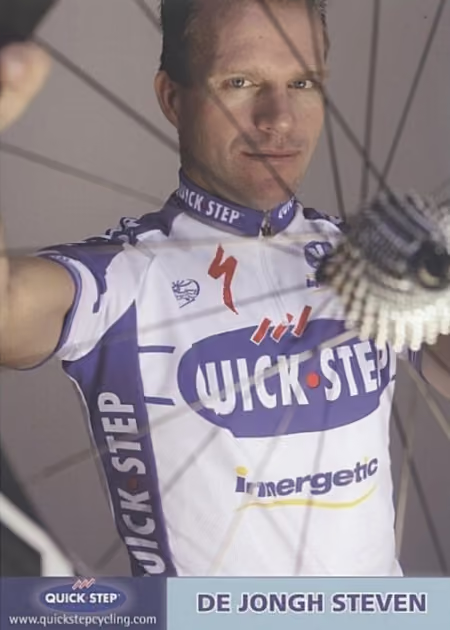
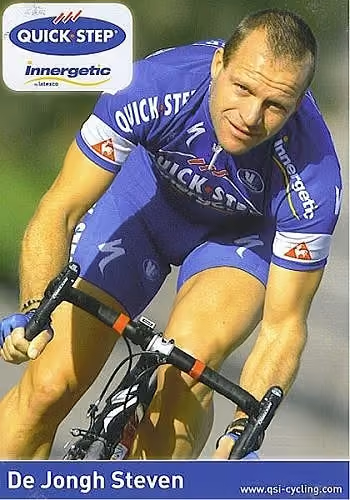
Quick-Step: Veteran of the Peloton
Moving to Quick-Step–Innergetic in 2006 extended his career at the very top of the sport. He continued to collect wins; Kuurne–Brussels–Kuurne again in 2008 (making it a double), stage wins at Three Days of De Panne and Tour of Qatar, and the Kampioenschap van Vlaanderen in 2009, which proved to be his final professional victory.
His value to a team like Quick-Step (with its deep roster of classics specialists) lay in his tactical intelligence, engine, and ability to deliver riders like Tom Boonen to the line. He retired from professional racing at the end of the 2009 season, with 15 years of top-level racing behind him.
2010–2012
Team Sky: Into Coaching
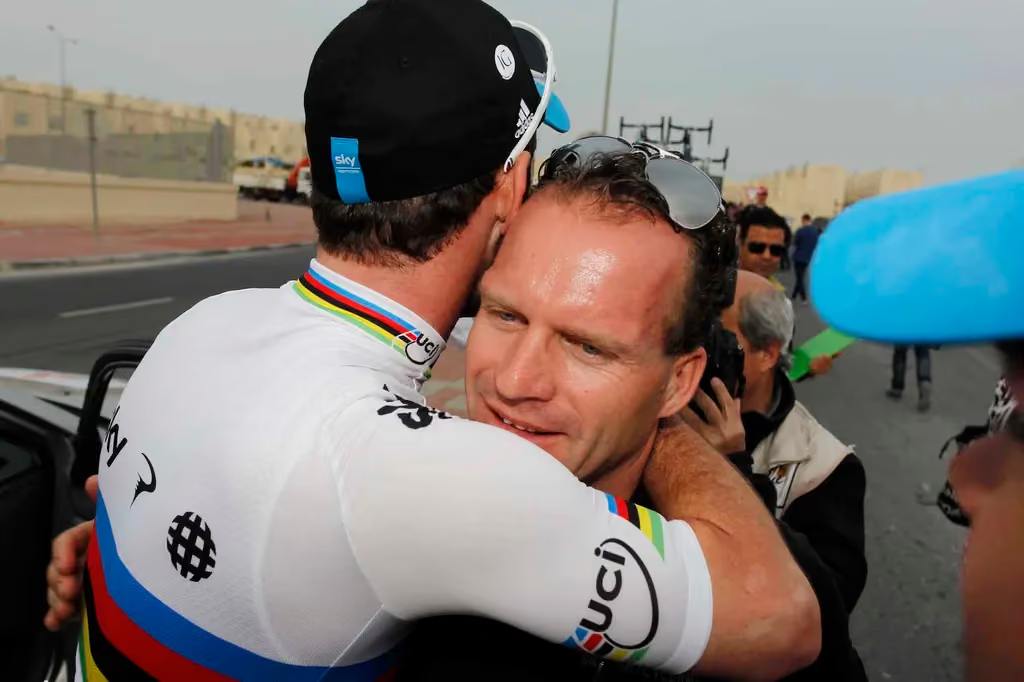
Retirement from racing led directly into a new chapter: sports director. Steven joined the newly formed Team Sky in 2010, helping to build one of the most ambitious and well-resourced teams in the history of the sport. He worked alongside riders including Mark Cavendish and Bradley Wiggins during a formative period for the British outfit.
2013–2016
Saxo–Tinkoff: Working with the Best
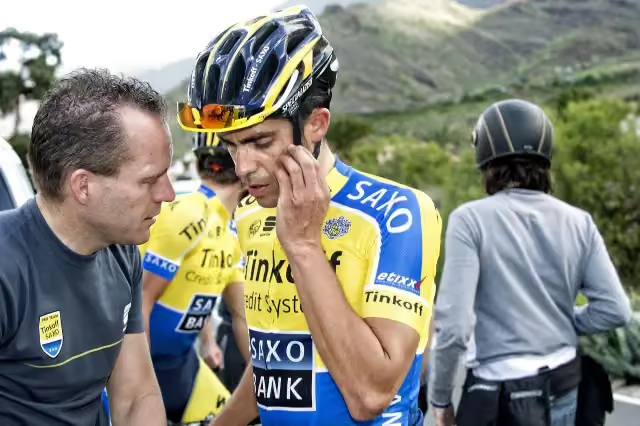
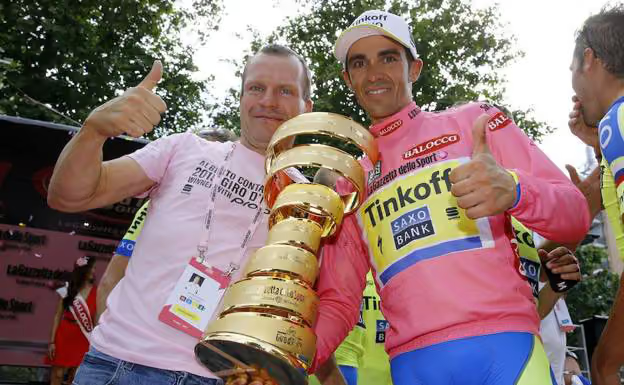
January 2013 brought a new challenge at Team Saxo-Tinkoff, one of the most dynamic teams of the era, built around Alberto Contador. As a directeur sportif, Steven was at the heart of Grand Tour campaigns, classics preparation, and rider development. When Oleg Tinkov announced the team's closure at the end of 2016, it marked the end of a four-year chapter that cemented his reputation as one of the sharpest tactical minds in the peloton.

2017–Present
Trek–Segafredo / Lidl–Trek
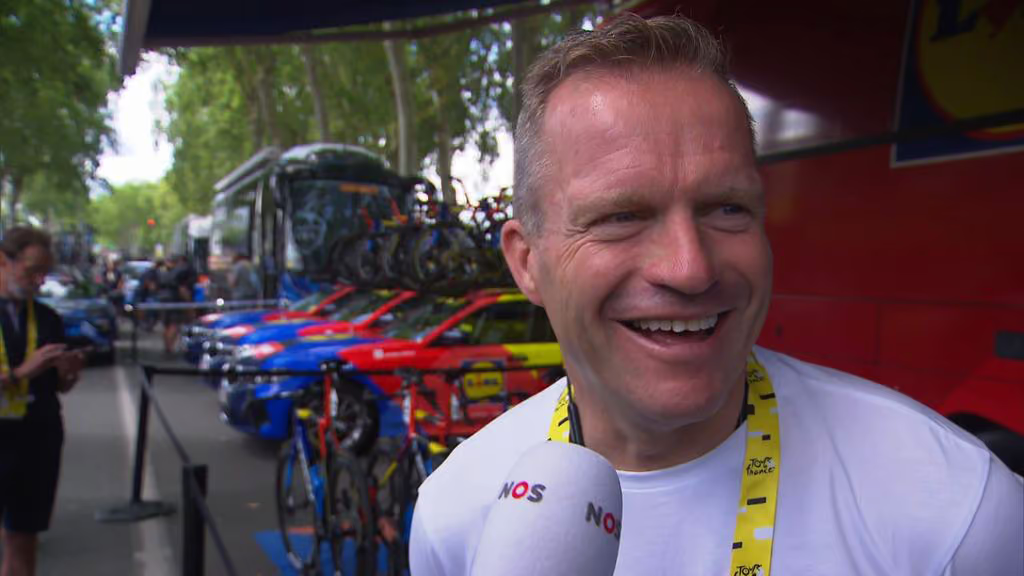
Steven joined Trek–Segafredo as sports director in 2017 alongside the transfer of Alberto Contador, applying everything two decades of professional racing had taught him. In June 2023 the team rebranded as Lidl–Trek, and Steven has remained a key part of the setup throughout, guiding riders through Grand Tours, monuments, and one-day classics. His expertise in northern classics racing in particular has made him invaluable in preparing riders for the cobbled spring campaign.
Beyond his role in the professional peloton, Steven has channelled his passion for the sport into Ride the Elevation, bringing the knowledge, discipline, and joy of WorldTour cycling directly to riders of all levels through camps set in some of Europe's most extraordinary cycling landscapes.